
In the Middle East, the distance between a piece of content and a purchase has nearly disappeared. A buyer in Jeddah sees a Reel, taps the creator’s link, lands on a WhatsApp chat, and pays through a local gateway, all within five minutes. The storefront, in any traditional sense, never enters the picture. This is social commerce, and in MENA it is moving faster than in almost any other region.
The reason is structural. Mobile penetration in the GCC is among the highest in the world, social media usage is heavy, and the regional buyer has grown comfortable making decisions inside chat. The result is a commerce flow that looks completely different from the Western model, and brands that try to force a Western checkout onto a MENA audience consistently underperform brands that build for how the region actually shops.
Why MENA Is Different
What makes the Middle East different is the role of trust and conversation. Western social commerce assumes a self-serve checkout. The buyer sees an ad, clicks through, and completes the purchase without speaking to anyone. MENA buyers often want to talk first. They want to ask questions, see additional photos, negotiate gently, confirm sizing or compatibility, and pay in a way that feels familiar. Skipping this conversation feels cold to a regional buyer in a way that is hard to explain to a brand built in a different culture.
The brands winning here are the ones that have built a content-to-checkout flow that respects this behavior, not one that fights it. They treat the chat as part of the purchase, not as an obstacle to it. They staff the chat properly, respond fast, and use the conversation to build a relationship that turns a single sale into repeat business.
.jpeg)
The Non-Negotiable Parts of the Flow
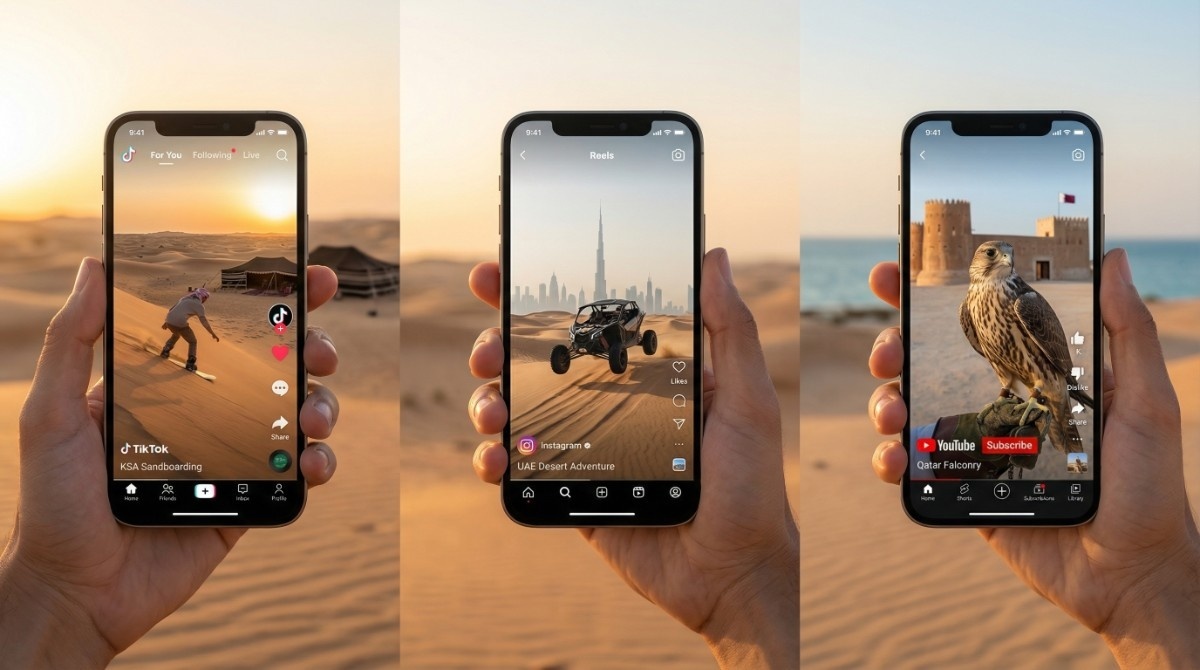
That flow has a few non-negotiable parts. Short-form video that sells without feeling like a sales pitch, because the regional buyer scrolls past anything that looks like an ad. The video does the discovery work and the soft sell. It does not close the deal.
A creator or community voice that adds credibility the brand cannot manufacture on its own. In the GCC and Pakistan, a recommendation from a trusted regional creator carries more weight than any amount of brand-owned content. The creator does not need to be famous. They need to be trusted by their specific community.
A frictionless handoff to WhatsApp or a similar chat layer where real conversations happen. The link in the bio should not lead to a website. It should lead to a conversation, with a real person on the other end ready to answer questions in the buyer’s language, in the buyer’s time zone, in the tone the buyer expects.
And a payment experience that supports local methods, including cash on delivery in markets where it still dominates trust. Forcing a card-only checkout in markets where COD is the default shopping behavior is one of the fastest ways to lose a sale that was almost closed.
.jpeg)
The Brands That Get It Right
The brands that get this right are not always the biggest. They are the ones that treat content, conversation, and conversion as a single system instead of three separate departments. The marketing team that makes the Reel, the community manager who answers the WhatsApp message, and the operations person who arranges the delivery are all working from the same playbook, and the buyer experiences it as one continuous moment.
For boutique brands across the GCC, this is the single highest-leverage opportunity in 2026. The infrastructure is in place. The buyers are ready. What is missing in most cases is the operational discipline to connect the three pieces, and that is exactly the kind of work a small focused team can do better than a big one.
The brands that build this system now will have a structural advantage that bigger competitors will struggle to copy, because the advantage is not in the technology. It is in the rhythm of the team running it.

Want a social commerce system that turns content into conversion? Let Add Hype map it.




































.jpeg)
.png)