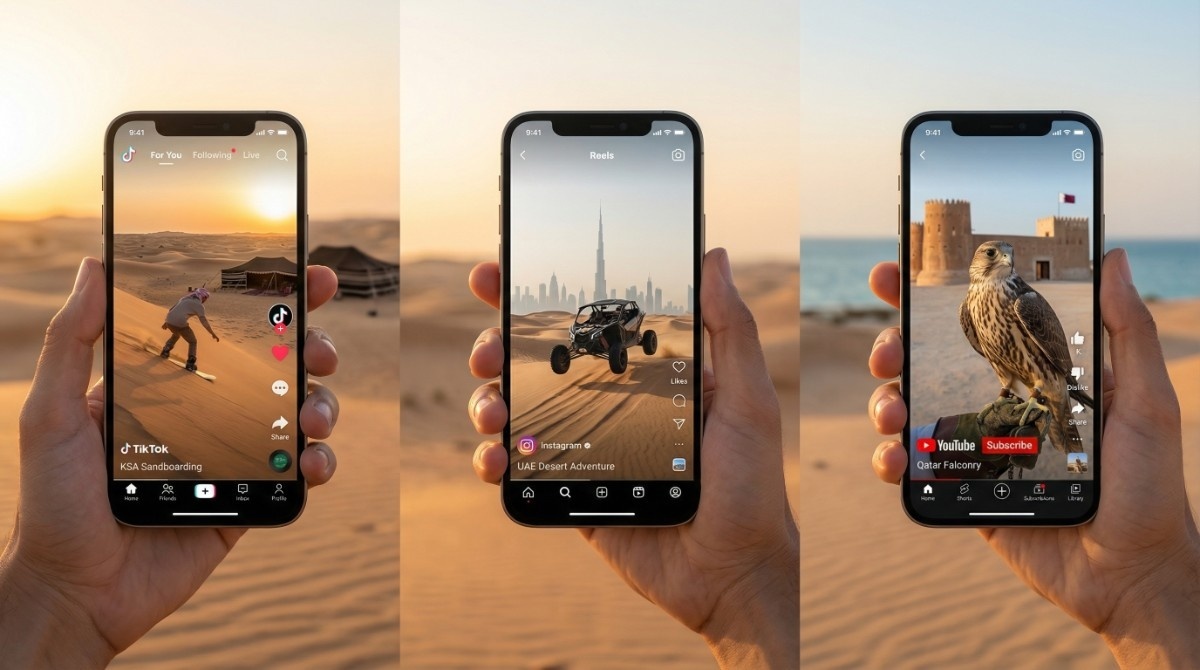
An integrated campaign is one idea travelling across channels, where each channel adapts its expression but never its meaning. Multi-channel is simply presence: many messages in many places, often related, rarely the same thing. The difference is not academic. Integrated campaigns compound, because every exposure deposits into the same memory. Multi-channel campaigns scatter, because every exposure opens a new account.
The definition that holds up
Test any campaign with one question: if you stripped the logo from every asset, would a viewer recognise them as the same idea? If yes, it is integrated. If the TV spot, the social content, and the in-store material would read as three different brands having three different thoughts, it is multi-channel wearing integration's name. The idea is the unit of integration. Not the look, not the tagline, the idea.

Why the confusion persists
Because multi-channel is easier to sell and easier to staff. Every channel team gets to make its own thing, every vendor gets a brief, and the plan looks impressively busy. Integration requires something harder: an idea strong enough to survive translation into a six-second bumper, a mall activation, and a packaging line, and a team disciplined enough to protect it through every adaptation. Busy is easy. Coherent is rare.

Our World Diabetes Day work for Roche ran across film, social, influencer content, on-ground activation, and clinical channels. Every format did a different job: film carried emotion, social carried participation, activation carried experience, clinical channels carried credibility. But every format expressed the same single idea, which is why three years of campaigns compounded into a platform rather than evaporating annually. The channel logic adapted. The idea never did.

The discipline that makes it work
Three rules keep a campaign integrated under production pressure. Write the idea in one sentence and tape it to every brief. Let channel teams change everything except what the sentence protects. And review adaptations side by side, never in isolation, because drift is invisible one asset at a time and obvious in a row of eight. Integration is not a creative style. It is a management discipline.

Key takeaways
- Integrated: one idea travelling across channels. Multi-channel: many messages in many places.
- The logo-strip test: without logos, would all assets read as the same idea?
- Integrated campaigns compound into one memory. Multi-channel scatters across many.
- Channel expression adapts. The idea never does.
- Review adaptations side by side. Drift is invisible one asset at a time.
Sources
- IPA effectiveness studies on campaign integration.
- Add Hype integrated work for Roche WDD and Snickers across the GCC.
Add Hype builds campaigns where the idea travels and the channels serve it. If your last campaign was busy rather than coherent, write to us at hype@weaddhype.com.

































.jpeg)
.png)