
Webflow versus WordPress is not a religious question, it is a fit question. Across the six dimensions that decide it for serious brands, Webflow wins design control, development speed, maintenance, and SEO hygiene out of the box. WordPress wins raw cost flexibility and ecosystem scale. Here is the honest version of each, and when each platform is the right call.
Where Webflow wins
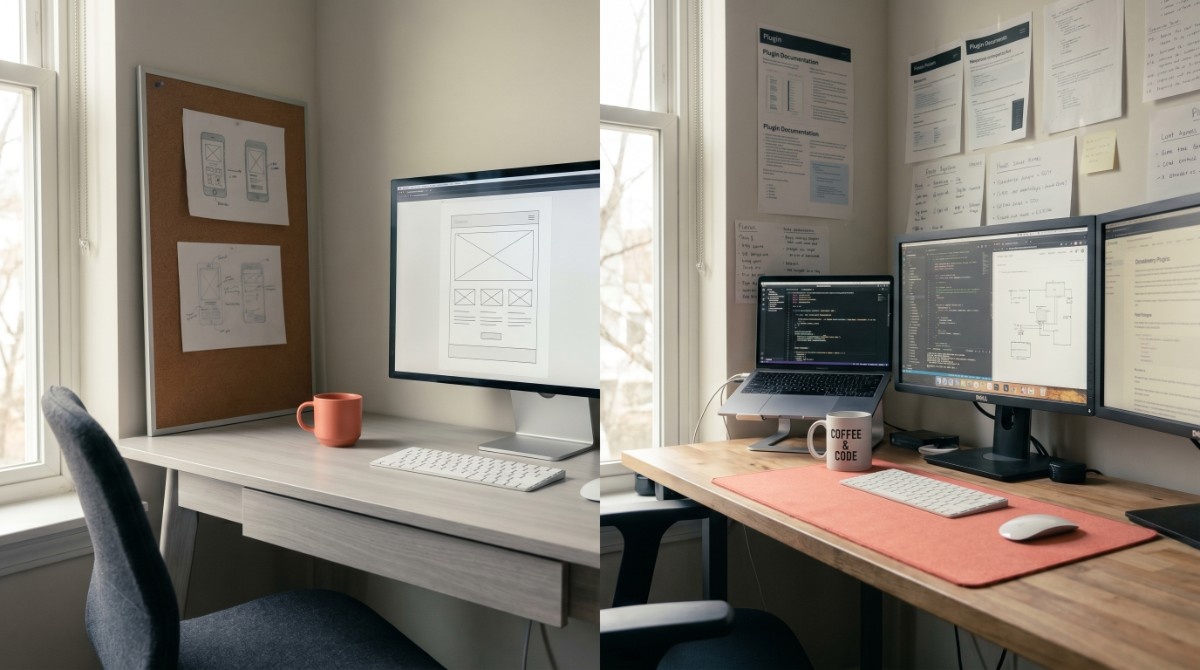
Design control: Webflow renders what the designer built, pixel for pixel, without a theme fighting back. Development speed: a brand site that takes eight weeks in WordPress routinely ships in five on Webflow because design and build collapse into one workflow. Maintenance: no plugin stack to patch, no update cycle that breaks the homepage on a Friday. SEO hygiene: clean markup, fast hosting, and structural control come standard rather than through a plugin negotiation.

Where WordPress wins
Cost flexibility: WordPress itself is free, hosting is commodity, and a competent build can start cheaper than Webflow's subscription plus build cost. Ecosystem scale: WordPress powers roughly 40 percent of the web, and that gravity means a plugin, a developer, and a tutorial exist for everything. Complex publishing operations, multilingual editorial at scale, and heavily customised backends still favour WordPress when an experienced team runs it.
The total cost of ownership question
Sticker price favours WordPress. Three-year cost usually favours Webflow. Add the WordPress line items honestly: premium plugins on annual licences, a maintenance retainer for updates and security, occasional emergency fixes, and developer dependency for every structural change. Webflow's subscription looks expensive until it absorbs all four. For most boutique and mid-size brand sites, the three-year totals converge, and the operational calm tilts the decision.

The decision in one paragraph
Choose Webflow if the site is a brand and marketing asset, the team is small, design fidelity matters, and you want marketing to ship changes without a developer. Choose WordPress if you run a large editorial operation, need deep backend customisation, or have an in-house team that already lives in it. Both can rank, both can convert, and both fail equally well in unskilled hands.

Key takeaways
- Webflow wins design control, build speed, maintenance, and out-of-box SEO hygiene.
- WordPress wins cost flexibility and ecosystem scale, powering roughly 40 percent of the web.
- Three-year total cost usually converges. The plugin and maintenance stack is WordPress's hidden line.
- Webflow suits brand-led sites with small teams. WordPress suits heavy editorial and custom backends.
- Platform choice matters less than the skill of the team building on it.
Sources
- W3Techs CMS usage statistics.
- Webflow customer showcase.
- Add Hype build experience across both platforms, with Webflow as the boutique default.
Add Hype builds on both platforms and defaults to Webflow for boutique brands. If you are choosing, write to us at hype@weaddhype.com with your page list and we will tell you which one your project actually needs.


































.jpeg)
.png)